Updated “shows to spec” list
January 15, 2024
Hello, friends — wanted to update this list because a lot of shows have come and gone since my last posting on the topic. Remember, here “spec” means a sample episode of an existing show (seriously, how have writers been unable to come up with a separate way to describe this when “spec” also means an original pilot written on spec?).
To reiterate — yes, if you’re still trying to break into the TV writing game, you should have at least one current sample episode of an existing TV show. Why? Because some fellowships still require them. Because you can still compete at places like the Austin Film Festival with them (which can help you get repped). And because you might run into upper-levels or showrunners like moi who want to be sure you can do the job you’re after: writing a show in another creator’s voice.
But mostly, you’re writing them to build your muscles so that when you get your first assignment on staff, you’re ready to hit the ground running and you feel confident in your ability to mimic another writer’s style and voice. It’s for you more than it’s for anyone else.
Anyway… I’ve lectured about this enough. If you’re ready to write a new spec… or write your first one… here’s a list of shows as current as I could conjure. Shows will get canceled any day now and more will debut as 2024 progresses — and anything that has aired in this broadcast year (Sept 2023 on) works — or if you know it’s coming back but was delayed because of the strikes — that still works, too.
So pick a show you love and dive in. You’ll be better prepared for your first staff job if you do it.
SHOWS TO SPEC LIST
COMEDY
- Abbott Elementary
- American Dad
- And Just Like That
- Bad Sisters
- Based on a True Story
- Bob’s Burgers
- Bookie
- Bupkis
- Emily In Paris
- Family Guy
- Frasier (2023)
- Ghosts
- Girls 5 Eva
- Hacks
- Harlem
- Harley Quinn
- Jury Duty
- Killing It
- Lopez vs. Lopez
- Loot
- Mythic Quest
- Night Court (2023)
- Not Dead Yet
- Only Murders In the Building
- Rap Sh!t
- Rick & Morty
- Scott Pilgrim Takes Off
- Sex Lives of College Girls
- Shrinking
- Somebody Somewhere
- South Park
- Star Trek: Lower Decks
- Survival of the Thickest
- The Bear
- The Connors
- The Curse
- The Neighborhood
- The Righteous Gemstones
- The Upshaws
- Twisted Metal
- Unstable
- Unprisoned
- Upload
- We Are Lady Parts
- What We Do in the Shadows
- XO, Kitty
DRAMA
- 9-1-1
- 9-1-1 Lone Star
- Accused
- Alert: Missing Persons Unit
- All American
- All American: Homecoming
- American Horror Story
- Andor
- Bel-Air
- Black Mirror
- Blue Eye Samauri
- BMF
- Bosch: Legacy
- Bridgerton (Most current chapter)
- Cobra Kai
- CSI: Vegas
- Echo
- Euphoria
- Evil
- Fargo (Season 5)
- Fire Country
- For All Mankind
- Found
- Foundation
- From
- Gen V
- Ginny & Georgia
- Godfather of Harlem
- Goosebumps
- Halo
- House of the Dragon
- Industry
- Interview with a Vampire
- Invincible
- Leverage: Redemption
- Loki
- Lupin
- Mayfair Witches
- Mayor of Kingstown
- Monarch: Legacy of Monsters
- My Life With the Walter Boys
- Nine Perfect Strangers
- One Piece
- Our Flag Means Death
- Outer Banks
- P Valley
- Peacemaker
- Percy Jackson and the Olympians
- Poker Face
- Power: Book II, III, & IV
- Quantum Leap (2022)
- Reacher
- Reasonable Doubt
- School Spirits
- Severance
- Silo
- Slow Horses
- So Help Me Todd
- Star Trek: Strange New Worlds
- Station 19
- Stranger Things
- Superman & Lois
- The Boys
- The Brothers Sun
- The Chi
- The Changeling
- The Cleaning Lady
- The Diplomat
- The Equalizer
- The Gilded Age
- The Handmaid’s Tale
- The Irrational
- The Last of Us
- The Lincoln Lawyer
- The Lord of the Rings: Rings of Power
- The Mandalorian
- The Morning Show
- The Other Black Girl
- The Recruit
- The Rookie
- The Night Agent
- The Sandman
- The Umbrella Academy
- The Wheel of Time
- The White Lotus
- The Witcher
- Virgin River
- Walker
- Wednesday
- What If?
- Will Trent
- Yellowjackets
- Yellowstone
Franchise shows like the 911s, Chicagos, L&O, and Walking Deads, are all fine to spec if you so choose. People will probably be familiar with those tones even if they no longer watch these long-running shows.
You can’t say you care about diversity and inclusion and then make it impossible for historically underrepresented writers to build a career.
Studios have launched a host of careers in television through their pipeline programs.But you can’t open one door then padlock the next… aka why diversity and inclusion are bigger than just starting a career.
When the Writers Guild of America went on strike at 12:00 a.m. May 2nd, it was because our leadership had rightly identified a host of issues writers are facing that were worth a strike – underpayment of residuals, mini-rooms devaluing writers and their work, lack of writers being trained in production and post, a need for payment steps to eliminate free work for feature writers, among others – and these issues affect every single member of the WGA. Even for the more established writers, who’ve been at this 15 to 20 years+, unless they’re making Shonda Rhimes or Ryan Murphy money… their pay is declining, too, because of the same issues listed above.
That’s the right message for the WGA to put out… this affects everyone. Because it does. Without question.
But as a historically underrepresented writer, I want to talk about how everything the WGA is fighting for affects us in particular ways – because as the data shows, things that affect all writers tend to land on our shoulders in harsher, more debilitating ways.
Before I get into a lot of the specifics, let me say honestly that my career exists because of the existing pipeline programs at the major studios. I’m an alumni of the CBS (now Paramount) Writers Mentoring Program and NBC’s Writers on the Verge (now NBC Launch). The people who facilitate these programs are among the most dedicated and passionate folks I’ve met in this business. They do the hard work of helping writers like me, who often have no industry connections, make the necessary first steps to break into TV writing. Now you can bet they make sure you’re talented and hardworking and dedicated as hell before they help you take that step… and the application process and curriculum bear that out. But it’s a way for people who have long been denied access to this industry – and specifically writers’ rooms – to get a shot. (By the way, per the Think Tank for Inclusion & Equity “Behind the Scenes” report for 2022, it’s easier to get into Harvard – a 5.2% acceptance rate – than it is to get into one of these fellowships – 0.3 to 0.7% acceptance rate.)
So if the programs worked for me, for others, what am I complaining about?
Well, like most things in our business, everything has changed. I broke into TV ten years ago when the broadcast model was still pretty much where all emerging writers started out. That script got flipped as streaming boomed and more and more outlets demanded more and more content. That saw emerging writers getting jobs on streaming shows, often in mini rooms (shorter rooms to break/write whole seasons in a fraction of the time of a conventional room, often before the shows were actually greenlit to production), and yes, with all that new content, there were a lot of jobs…
Just not jobs for everybody.
Mini rooms tend to be top heavy rooms, meaning if you have a staff of six writers, you might have the showrunner, three co-executive producers (seasoned, experienced writers,) a mid-level writer or two… or if you only hired one mid-level, maybe a staff writer. But more often, there’s no lower-level writer on staff.
Now I hear you… that sounds bad for every lower-level writer. Yep… it is.
Here’s why it hits historically underrepresented writers harder –
Most of those top-heavy job titles are filled by historically overrepresented writers.
That’s always been true… because for years our business was dominated by white males, and while we’ve made progress, they still make up the majority of upper-level writers.
According to the WGA Inclusion & Equity Report for 2022, data from the staffing year 2020 showed that, “BIPOC women make up significant shares of lower-level writers. BIPOC women writers make up the smallest share of EPs and Showrunners at 7.4% and 6.9%, respectively.” It also shows that, “BIPOC men accounted for 16-26% of jobs from staff writers to consulting producer. At the upper levels of Co-EP, EP and Showrunner, they accounted for 10-12% of jobs.” Meanwhile, “White men’s share declined at the staff writer and story editor level compared to the prior season. However, they account for a majority of jobs at the higher levels, making up 64% of EPs and 58% of Showrunners.” [White Women “represented the second largest share of staff writer, story editor (with the same share as BIPOC men) and ESE positions. White women are also the second largest share of upper-level positions, though they still lag behind white men considerably.”]
So if no lower-level/staff writers are being hired at all… and historically underrepresented writers often aren’t considered for those upper-level positions, do you see the problem?
Historically underrepresented writers end up stuck.
They get stuck because there are no lower-level jobs. Or because the shows can only afford a lower-level position after they hire all those upper-levels, so that Indigenous, Latinx, AAPI, Disabled, Middle Eastern, or Black writer who has already been a staff writer will be asked to repeat that title – and pay rate – in order to work at all.
They also get stuck because mini rooms, which are where so much of the room work is now, result in writers not getting the experience they need in order to climb to those higher titles. (Per the Think Tank for Inclusion & Equity “Behind the Scenes” report from 2022, 56% of lower- and mid-level writers did not cover set on their most recent show.)
Or they get put in the terrible position of being over-promoted (thanks to short season orders) without that experience on set or in post, and then aren’t prepared when they’re asked to perform at a level that requires that experience.
So how can I think the programs are important and useful, cheer the studios for having them and financially supporting them, but complain about the studios not doing enough?
Because it doesn’t do any good to open a door into a room if all the other doors are locked.
I came into an industry that still had a functioning mentorship system in place… writers who had already learned to produce on set and wrangle post taught other writers how to do these parts of the job – parts you can only learn on the job.
But we’ve seen all the stories about writers in mini rooms or on streaming shows who don’t ever have the opportunity to go to set or post because the studios have rigged the system to eliminate writers from the process as soon as the initial writing is done. [I say “initial” because the writing never stops until the episode is locked and delivered to the network/outlet. You write in pre-production, you write on set, you write in post. It’s all writing.]
That lack of opportunity… those are the locked doors I’m talking about. Great, you got your first writing job… now good luck getting the experience you need to grow your career, to learn to produce, to learn post, to become a showrunner… because the studios have taken away, by and large, the mentorship structure that allowed those doors to open, to give rise to the creators and showrunners of the future.
And when the goal of opening those doors is tied to diversity and inclusion, to bringing in historically underrepresented writers and stories, then there’s a baseline truth that has to be accepted: you can’t invite us to the table and then tell us that’s all we get… no chance to learn how to make the meal, create the recipes, or be the boss of the creative mix that results in a new, cool, hit television show.
According to the LA Times (05/24/22), Netflix, in the wake of George Floyd’s murder, pledged $100 million over five years to organizations that help underrepresented communities find jobs in the entertainment industry. That’s a great and positive thing to do – but what the WGA is asking for in terms of writer protections, better compensation, and more opportunity for writers in general is more valuable to historically underrepresented writers… because those protections will allow us the chance – the chance – to build a career that doesn’t just make us successful, it provides greater product and content for the studio itself… because having writers on set and in post always makes the product better and usually saves money because decisions in a crisis can be made quickly without a game of telephone tag trying to reach the showrunner or another executive producer that can cost time, which costs money.
In July of 2020, CBS Television Studios began a five-year pact with the NAACP to develop content that not only utilized diverse voices but to expand the storytelling space and create more inclusive content. I’ve worked under this umbrella myself to pitch some potential show ideas, and the work they’re doing is important across the board in encouraging people to expand their ideas about what a show could look like when it’s both inclusive and avoiding stereotypes we’ve all become used to on TV. But I can’t lie… when I first heard about this endeavor, my first thought was… “not enough of us have been trained to showrun to make this work.” What does that mean? It means that historically underrepresented writers who do come up with a winning show idea – but don’t have experience – often have to be paired with experienced showrunners to get their projects greenlit. And “experienced” will often mean “historically overrepresented.”
Why is that? Because again… things changed. A host of us who came into this business when the mentorship system was working have reached that hard won showrunner/executive producer level (including me if my show survives the strike.) Off the top of my head, I can list these talented folks who all came up through pipeline programs: Nkechi Okoro Carroll, Nichelle Tramble Spellman, Simran Baidwan, Denise Thé, Aaron Rashaan Thomas, Debby Wolfe, Akela Cooper, Kirk A. Moore, Brittany Matt, Zahir McGhee, Leonard Chang, and Angela Kang… with many more my brain can’t pull forward right now.
But there are only so many of us who made it through the gauntlet when the system worked… and now that system is broken. Meaning a lack of showrunners from diverse backgrounds to supervise and co-showrun with other writers from underrepresented communities. According to the WGAW Inclusion & Equity Report for 2022: BIPOC writers make up over 50% of employed writers from staff writer to co-producer (i.e., lower- and mid-level). But this up-and-coming cohort of writers is often unable to build the vital skills they need to eventually run their own shows.
Some studios have responded to this by trying to bolster showrunners within their own systems. In 2021, Sony, for instance, launched an in-house showrunner training program. Warner Bros. Discovery (then Warner Media) followed suit in 2022 under their DEI “Access” banner. Fantastic efforts. But it doesn’t solve the problem of not getting hands-on work experience — the best preparation you can have to become an EP/Showrunner — because no matter how many stories you hear or classroom situations you work, it’s just not the same as being there. [I’m also an alum of the WGA Showrunner Training Program, which is invaluable when it comes to the business side of showrunning… but it can’t replace being on set/in post and doing the work for building your showrunner skillset.]
Obviously, I’m not suggesting that the studios have a responsibility to handhold writers from day one of their careers to day one of showrunning. What I am saying is that their investment in the diversity and inclusion they say they want has to include allowing writers the time – and financial stability – to grow into the role of showrunner. Because no one who can’t afford their rent and is worried about qualifying for healthcare every year is going to make it long enough to reach that goal. And a lot of potentially money-making, award-winning ideas will leave town with them when they pack their bags.
[Don’t get me started on how the idea of A.I. writing scripts upends EVERYTHING about diversity and inclusion. Since A.I. can only create from absorbing and reforming written material (plagiarism, for the record,) then it’s going to be reading scripts written, again, by an overwhelming majority of historically overrepresented writers. Women, BIPOC writers, LGBTQIA+ writers, Disabled writers… all of whom have only recently gained any traction in this business… will have little to say about what future A.I. scripts might look like… because their points of view, their voices would be so little of what the computer program would study to create a “new” story.]
I talk about these talent development programs with a drop of fear in my heart. Because we’re all worried that they’ll be next up on the corporate studio cost-cutting chopping block. Warner Bros. Discovery set off alarm bells all over town last year when they eliminated the studio funded writing and directing talent development programs. DEI warrior Karen Horne, Senior VP and lead of WBD’s DEI division, swept in and saved the programs by bringing them under her wing. But we all know that if bosses are looking to find that line item cut they can justify to a board… developing new, diverse, inclusive talent might start to look like something that can go.
But fear isn’t a reason not to fight. It’s why the WGA is taking on this strike, heart bold, resolve solid… fighting for every writer.
It’s why I needed to call attention to writers like me… writers I mentor, writers who haven’t even dreamed of being writers yet… who need me to fight for them the way my mentors fought before me to push that door open so I could step through.
The need for sustained, consistent DEI in the talent development space in our business is real and will be real for a long time to come as we close gaps created by an inequitable history. And the best way to invest in diverse voices and points of view — besides giving us that first shot – is to make sure we can afford to stay in the game. Fair pay. Fair treatment. Protected term employment. The opportunity to learn and grow.
So yeah… everything the WGA is fighting for is good for all writers. But it’s essential for historically underrepresented writers who are still trying to make up ground after being excluded from the business for decades.
TV writing is a mentorship business. Don’t believe anyone who tells you otherwise.
Fine, Niceole! I’ll write a spec!
October 26, 2022
I know, I know, people are tired of hearing me harp on this – but seriously, if you’re still trying to break into TV as a writer, you should have at least one current spec that’s ready to go if someone asks you for one. Why? Because sometimes having that to prove you know how to do the job you’re trying to get – mimicking someone else’s style and voice – can make the difference between who gets the gig when it comes down to “you and one other person.” Or you might run into showrunners who insist on specs at the staff writer level. Yes – that happens.
I know your reps may be telling you no one reads them – but sometimes people do. And in this highly competitive business – have EVERY tool available to keep someone from saying no to you.
So… one current spec. Always on hand.
And if you’ve never written one – please, PLEASE write one. Because as stated above – it’s the actual job you want. So practice.
So then the question comes – but what do I spec? There’s too much TV and no one watches everything and so how do I know what to write?
Fair – and I hear you. So I took the WB Fellowship list as a starting point, polled some writers to see what they thought I should add or delete – and voila! A LIST!
I used to be the girl who watched everything – I watch much less now. But honestly, there were maybe five shows total on this list that I had to look up to see what they were. Most of them I (and many showrunners) would know well enough that we get the tone and style of the show. So anything on this list for the 2022-2023 time period should work.
New stuff will come out – but remember, first-season shows are tricky. If they’re not already renewed for S2, you may get a very short bang for your buck. So try to pick something that feels like it will stick around. It’s fine to pick a limited series or a show in its final season – just know the same applies: you get less of a shelf life from that.
And yes, there are shows not on this list – and yes, you can spec them. These are suggestions to help narrow a very large field, but the first rule of writing a spec is “spec what you love.” So if you love something not on this list, and you really want to spec it… spec it.
And one last piece of advice – if you’ve never written a show with act breaks (you know, a broadcast or basic cable show) – may I recommend doing a spec episode of one of those shows? With all the major platforms going to ad-supported tiers, knowing how to craft an act break into a commercial might come in handy.
Okay – enough preaching. Here’s the list. Write, write, write! And HAVE FUN! (I tried to delete all the stuff that has been canceled or ended recently. If I missed one, apologies.)
SHOWS TO SPEC LIST
COMEDY
Abbott Elementary
American Dad
Archer
Barry
Big Mouth
Bob’s Burgers
Bob Hearts Abishola
Breeders
Call Me Kat
Dead to Me
Emily In Paris
Family Guy
Ghosts
Girls 5 Eva
Grown-ish
Hacks
Harley Quinn
How I Met Your Father
Loot
Master of None
Mythic Quest
Never Have I Ever
Only Murders In The Building
Paradise P.D.
Physical
Ramy
Reservation Dogs
Rick & Morty
Russian Doll
Search Party
Sex Lives of College Girls
She-Hulk
South Park
Star Trek: Lower Decks
Ted Lasso
The Connors
The Goldbergs
The Neighborhood
The Other Two
The Righteous Gemstones
The Wonder Years
Upload
We Are Lady Parts
What We Do in the Shadows
Woke
Young Rock
Young Sheldon
DRAMA
9-1-1
9-1-1 Lone Star
A Million Little Things
All American
All Rise
Andor
Billions
Bosch: Legacy
Bridgerton
Cobra Kai
David Makes Man
Doom Patrol
Euphoria
Evil
For All Mankind
Foundation
Ginny & Georgia
Gossip Girl
Grey’s Anatomy
Hightown
House of the Dragon
Homecoming
Interview with a Vampire
Lupin
Manifest
Ms. Marvel
Nancy Drew
New Amsterdam
Our Flag Means Death
Outlander
P Valley
Pennyworth
Perry Mason
Power: Book II, III, or IV
Queen Sugar
Severance
Sex Education
Shadow & Bone
Snowfall
Star Trek: Discovery
Star Trek: Picard
Star Trek: Strange New Worlds
Stargirl
Station 19
Stranger Things
Succession
Superman & Lois
Sweet Tooth
The Boys
The Chi
The Crown
The Flash
The Flight Attendant
The Good Doctor
The Good Fight
The Great
The Handmaid’s Tale
The Lord of the Rings: Rings of Power
The Mandalorian
The Marvelous Mrs. Maisel
The Morning Show
The Resident
The Rookie
The Umbrella Academy
The Wheel of Time
The White Lotus
Titans
Tom Clancy’s Jack Ryan
Walker
Westworld
Witcher
Wu Tang: An American Saga
Yellowjackets
Yellowstone
You
My writing fellowship statements
May 14, 2020
Hey, writer peeps!
While I was moving some files onto my external drive, I decided to see if, by some miracle, I could find my applications from the years I got into the CBS Writers Mentoring Program and NBC’s Writers on the Verge. And shockingly — I found them.
I’m not sure if this is remotely helpful or not, but I know the letters/statements of interest and the essay questions are often people’s biggest concern. So what follows is my letter of interest for the CBS program and my essay questions for WOTV. If you find some guidance here that helps you along the way, fabulous. I am not correcting anything — so forgive any typos or poor grammar.
And good luck to you all!
CBS Letter (2010):
As a female writer of color, it’s been encouraging to see both my gender and my ethnic group represented more onscreen and behind the scenes. My ability to broaden that presence comes from a diverse life experience. I grew up in a small town, but moved to the city to put myself through college. I’ve worked in jobs as generic as hotel operator and as intense as police dispatcher. I come from a military family of Southern descent but was raised in California because my father wanted his kids to experience more freedoms than he’d grown up with. It’s these elements of my history that I try to weave together to create stories that resonate for me as a 21st century woman.
One fascinating aspect of TV writing is the relationship that develops between writer and audience as a show progresses through weeks and seasons. My motivation to study writing came directly from the impact shows like “Hill Street Blues” and “thirtysomething” had on me, and it’s my hope to someday have that same effect on viewers through my writing. I feel that a tour with the CBS Writing mentors would allow me to put a final polish on my work and to become another flourishing representative of what a strong and capable woman of color can do in the writers’ room.
Thank you for your time and consideration.
WOTV essay questions (2011):
1. What from your background do you bring to the table as a writer that provides a
fresh perspective in your storytelling?
When I think of what I bring to my writing that is unique to my experiences, there are two main things that come to mind. One is my own experience growing up in a very racially and religiously diverse family. When we moved to my father’s last military posting at China Lake Naval Weapons Center in the middle of the Mojave Desert, there wasn’t any other family in town that looked like mine. Over time that changed, but in those early years, that sense of being so different, even amongst the ethnic group I was identified with, gave me a strong desire to write material that not only shows what diversity looks like, but also peels away the facades we put up to hide what being different in any way really feels like.
Later, after moving to Los Angeles, my years working in law enforcement and post my own involvement, sharing stories with my friends and relatives that still work on the job, I gained a very personal insight into the impact that crime has not just on the victim, but on the family of the victim, and on the people who are pulled into the aftermath, be they sworn officers, civilian personnel or volunteers exposed to some of the ugliest things people can do to one another. I try to maintain that awareness whenever I write projects involving crime or disaster and the aftereffects.
2. What television show most inspired you to become a television writer and why?
The list of television shows I’ve watched is almost too long to be admitted in public, but of all the different dramas I’ve been a fan of, the one that most fueled my desire to write television was “NYPD Blue.”
The story arc of Andy Sipowicz was one of the most compelling character studies I’ve seen, and his transformation from alcoholic racist on the verge of losing his career to a compassionate, sober husband and father, and a respected leader of his precinct was a years-long roller coaster that exemplified the kind of involving storytelling I strive for. Along with Andy’s ever-evolving story, we were invited to view every aspect of life at the 15th precinct, where things could be hopeless one week and touched by the possibility of hope the next, where the cops, lawyers, victims, and perpetrators who walked through the doors could be simultaneously heroic, human, evil, and yearning for redemption.
A scene in which Andy relates a horrifying story about a murdered child to his fiancée Sylvia always comes to mind when I think of “Blue.” It was a one scene out of hundreds, and yet it was moving as he tried to explain to her why his faith had been destroyed and how she had given a little of it back. Those are the moments I think make a great show, and it’s that level of complexity I hope to achieve every time I begin a new piece.
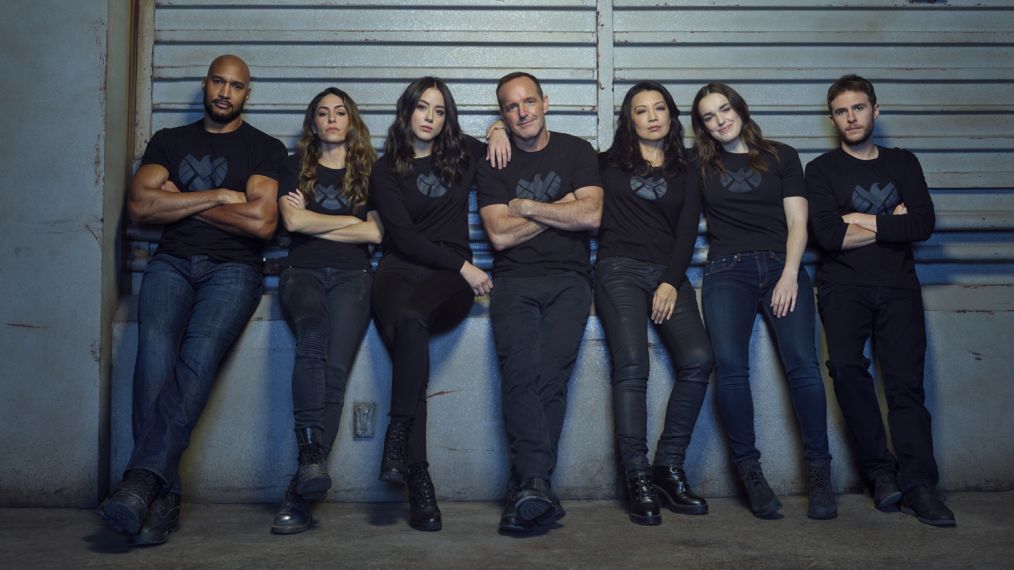
A spy’s goodbye to Agents of SHIELD
July 26, 2019
So it’s official.
“Agents of S.H.I.E.L.D.” is ending after season seven.
I mean, I figured – I work in TV. I know how to spot the signs. And I’m immensely grateful to have gotten past that emotional but “felt oh so final” finale of Season five when I thought it really was “The End” and gotten more time with my favorite crew of government secret agents.
The good news – we’re still three episodes away from the end of season six – and we don’t officially lose our Agents until next year when the final season airs.
But for the men and women who have made this show day in and day out for seven seasons – the end is coming soon. They’re filming their final episode. And then it’ll be time to say goodbye.
So first, I just wanted to say this…
THANK YOU!!!!!!!!!!!!!!!!!!!!!!!!!!!!
I was not a true believer as I freely admit (mostly because my friends know and will call me on it if I try to front). Despite the involvement of writers I respected and talent I adored (have you seen me swoon over Ming-Na Wen? Because it happens – a lot)… I wasn’t sure I believed this new “Marvel TV” experiment would work. But I really wanted it to. And then I didn’t love it. Not at first. And I walked away like so many other frustrated viewers.
But then a few good friends of mine (take your fanboy bows here, Steve and Phil) convinced me to try again. “Just start with episode 13. If you have questions, we’ll fill you in. But I really think you’ll love it now.”
So I watched episode 1×13.
AND IT WAS OVER.
Melinda May being a total badass, making moon eyes at Phil Coulson? Fitz and Simmons suddenly more than the baby agents I wasn’t sure I loved early on? The cool twisty villain turns I’d craved?
Yep, I was hooked. It was all over.
By then the big OMGWHAT episode that followed “Captain America: Winter Soldier” had aired, so I watched all the available eps on demand. And that was that.
I was in. Thrilled beyond belief that Ward was a bad guy (because he was way more fun as a bad guy,) loving Skye growing up into a more mature young woman because she finally had a family. And did I mention the Coulson and May heart eyes, because… WHAT?!
After that, my love was true and unshakeable. People love to tease me about how much I love this show, and my response to the naysayers is: “I’m sorry. It’s not my fault you don’t know what’s good.”
And the cast just kept winning with great adds… Adrianne Palicki, BJ Britt, Henry Simmons (DO YOU SEE MY HEART EYES RIGHT NOW?!), Nick Blood, Blair Underwood (HEART EYES, AGAIN!) Jason O’Mara (MORE HEART EYES)… I mean, it just goes on and on, and they’ve all been so great.
And if you heard a very loud, joyful, ridiculously gleeful scream when Mike Peterson hero strolled onto the base in the 100th episode – that was DEFINITELY me.
Not that this show hasn’t routinely ripped my heart out. Oh, so many times… but in all the best ways. Even just recently, when Daisy (formerly Skye for those who don’t keep up and missed the name change) ran over and grabbed Melinda May’s hand when they thought they might die? I mean… I am powerless not to feel my heart swell at that mother/daughter moment?! (And May is 100% her mom. I don’t care who gave birth to her, okay?!)
It has always peeved me a bit that somehow the remarkably stunning diversity of this show has gotten the short shrift in the media. The theme of the show has always felt, to me, that “anyone in the world can be a hero” and they’ve reflected that in their choices of heroes: men and women of all ages, women of color, men of color, a gay inhuman with badass powers… and the stories about people who feel the need to attack “others” have always reflected the moral fiber of the Marvel universe to perfection: we protect the “others” because we are all living beings and we deserve to be treated the same.
Also… this show gave me Melinda May to admire – someone who’d been through unspeakable tragedy and yet opened herself up to loving this crazy, mixed-up family she put together to protect Coulson. (P.S. — a testament to the little things, when “Nat” showed up on Melinda May’s call history? Fangirl freakout: May and Black Widow are friends!)
And it gave me a host of flawed, all-too-human heroic beings who sometimes failed — and worse, sometimes gave into their worst instincts – only to find their way back to the person they wanted to be and the family they couldn’t leave behind.
And maybe, emotionally, more than anything, I want to thank AOS for always bringing that same beautiful theme that made me fall in love with the Marvel MCU, starting with “Ironman”: no matter its problems, the world is worth saving.
But maybe most importantly, I need to thank AOS for teaching this then baby writer how to enjoy the ride. The writers, producers, cast, and crew have been incredibly generous with their time on social media, at conventions, and anytime I have encountered them in public. They have shared the love and fun they had making their show with all of us who enjoyed watching it – and that is a lesson I take with me into a future without this group cracking wise on Twitter and making me laugh on Instagram.
When Agents of S.H.I.E.L.D. premiered, no one knew if Marvel TV would be a thing that made it and lasted. And someone had to go first – so also, I thank them for being the start of something that led me to “Cloak & Dagger” and one of the best jobs any nerdgirl fangirl writer could ever ask for. I got a piece of that joyous work experience on our show, and I treasure it like a gift someone picked out especially for me.
So THANK YOU – to everyone who has written words, marked marks, set up cameras, fed the set, hung lights, ran errands, edited footage, killed it on the special effects, figured out how to blow things up on a network budget, touched up make up, fixed some hair, designed a costume, dressed a set, dreamed up a set… and on and on and on.
Your work was loved. You will be missed. And I hope your AOS memories are wonderful for a lifetime.
<lifts a shot glass to you all>
The Fantastic Five of this Writer’s Life
July 21, 2011
When I started the CBS Diversity Writers Mentoring Program, we had to submit a little bio about ourselves. Mine started off like this: “Niceole Levy has watched more than 700 prime-time television shows in her lifetime and often jokes that her Master of Professional Writing degree from USC was simply a way to justify all that TV time as ‘advanced research.’ Now she also calls it work, her position as a closed captioning supervisor providing access to hours of drama and comedy programming for her viewing pleasure.”
A few clarification points:
1. The actual number of television shows has just hit 746.
2. I really do get paid to watch TV, so a lot of those shows were watched for income, though some of those were certainly enjoyable and a few became favorites.
3. I know it’s hard to believe after seeing how much TV I’ve watched, but I do not spend all my time sitting in front of a television. On top of the obvious — writing — I cook, bake (a lot), do Pilates and dance workouts, walk, shoe shop (more than I should), spend time with family and friends, and go to a lot of summer movies where pretty boys blow up lots of things. In other words, I actually have a life that doesn’t involve TV. So how do I manage to watch so much? I apparently sacrifice sleep over a chance to hang with my favorite characters.
So, yeah, there’s been a lot of TV. I love it… not a bad thing to love the industry you want to spend the rest of your life working in, right? But out of that 746 shows (Wow. That really starts to look like A LOT of TV when I keep typing it), there are 5 key shows that had the biggest impact on the writer I have become and the one I continue to strive to be. And clearly I’m about to tell you what they are and why, but with this note — your 5 is probably different, and more power to you. There are some amazing shows that I love that won’t make this list (“China Beach,” “The Unit,” “The Sopranos,” “Boston Legal,” and the single-season gem “Terriers” to name but a few.) But these are the ones that, as I sit down to craft pilots, I think back on in the hope of trying to create something that is even a fraction as well-drawn, moving, and memorable.
1. “Hill Street Blues.” One of the most striking things about Hill Street to me is that really, if you could CGI in modern clothes and switch out the giant hand-held portable phones for smart phones, the subject matter holds up remarkably well. But one of the best things about HSB was that they were never afraid to reveal awful things about characters you loved… recovering alcoholic J.D. LaRue seemed to always be one step away from self-destructing, and even Renko’s friendship with Bobby Hill couldn’t always keep his old-school racism at bay. The writers also didn’t hide from the emotional costs or the life-and-death realities of what it meant to live your life on a beat, and often delivered that message with a punch to the gut for viewers. In a spoiler-free world, I had no idea Ed Marino’s Joe Coffey was going to be gunned down, and it absolutely broke my heart.
And to top it off, Frank and Joyce… who were the first couple I saw on television that made me think about what a real relationship should look like outside of all the romance and perfection so many other shows put on display. What did it really mean for two strong adults to try to put their two lives together and make a marriage work? I’m not sure I’d ever thought about that before these two forced me to think about relationships in more grown-up terms.
2. “Homicide: Life on the Street.” The true testament to the power of this show in my life can be summed up with one episode title: “Three Men and Adena.” The episode is so brutal and so upsetting that I have barely been able to rewatch it more than once since I first saw it. Because if Frank and Tim are right? If they’re right, then their inability to bring Risley Tucker (played by the always amazing Moses Gunn) to justice is injustice at its worst. And if they’re wrong? They destroyed a man emotionally and still couldn’t close their case.
Those were the stakes the cops of “Homicide” faced every week, and they pulled no punches, not when one of their own committed suicide or faced losing a part of himself after a stroke on the job, and not when one of Baltimore’s finest becomes a murderer rather than let a murderer go free.
3. “NYPD Blue.” I know, another cop show! But while Blue yet again dealt with cops, it was the character arc of one Andy Sipowicz that made it one of the shows I cherish most. If anyone had told me in year one that I would come to care so much for Andy, I’d have laughed at them. He was everything you’d come to expect in the disillusioned depiction of a cop… a racist, a sexist, a bad husband and father, a drunk. And yet piece by piece, we watched Andy’s life be rebuilt… destroyed… and rebuilt again.
It’s hard to say which of the tragedies Andy suffered broke my heart more… the day he found his son was the victim in the murder he’d responded to, the loss of his best friend Bobby Simone, or the death of his beloved Sylvia. But there is no doubt what my favorite Andy moment of all was… the last one, with Andy, now a fully-realized, strong, sober, happy man, in charge of the squad he loved after putting in all the hard work it had taken to earn the job and the respect that went along with it. It was one of the most amazing journeys I’ve ever been on with a character, and hey, as you know from the TV show total, I’ve been on a lot of them.
4. “Once and Again.” Gone far before its time, this show’s depiction of the complexities of life post-divorce, of falling in love again, of blending families, and of growing older never failed to move me. There were no perfect people anywhere to be found in this tale, no white knights riding in on horses to save the damsel. But there was such a level of honesty in how they revealed each layer to their characters, some hidden so deep that even in the final episode, Rick and Lily were still realizing that after they’d said I do and supposedly set out on their happily ever after, there was still a chance that they might want different things out of life, and what did that mean for their family?
Even when I wanted to yell at them, because everyone on this show could be a jerk, (because seriously, who can’t?) I felt their confusion and their struggle with whatever was motivating the jerky behavior. Years after the final episode, I still think of how much I would’ve loved to see Rick and Lily have their baby and face squeezing one more person into their already bustling lives or what a joy it would’ve been to see Karen finally… finally allow herself to be happy with Henry Higgins or how amazing it would’ve been to see this extended family that always found a way to tell the truth, even if it took a few lies or omissions to get there, discover and accept Jessie’s sexuality.
5. “Friday Night Lights.” The most recent entry to my Fantastic Five, but no less beloved than the others, from the very first episode of FNL, I knew I’d love this show forever. Something about the way you felt everyone else’s reaction to Jason Street’s injury told you about what this show was and what you could expect from it, and even that one little misstep in season two (okay, not so little, but still, we all got over it, right?) did nothing to diminish my devotion. This show faced the task of replacing treasured characters as the originals “aged out” and graduated, and I remember being so worried that I’d never feel for Vince Howard the way I had about Matt Saracen. Who could touch my heart the way 7 had? And yet I went into the final season of the show worried sick that Vince’s past might come back to destroy him and hoping against hope that he would stay on the path Coach Taylor had set him on. And could I love any character more than Tim Riggins? He was every guy you’ve ever known who is good at heart and can’t seem to catch a break. And yet finally, even Tim Riggins seemed on the path to a good life because of the town that never forgot him and the people who loved him.
Much has been written about the Taylor marriage in FNL, and it is truly one of its finest aspects. I won’t belabor it by repeating everything great that’s been written about it except to say that it was inspiring at every turn. But one of the biggest things I will take away from FNL is the spirit of the show. Clear Eyes. Full Hearts. Can’t Lose. It wasn’t just Coach Taylor’s winning philosophy. It was a summation of what you can do when you write from your heart and tell a great damn story.
So as my latest pilot outline goes to script, many of the things I consider on the journey will be those I’ve mentioned here. How can my couples’ relationships be as meaningful and as important as the ones I loved so much? How can I write an episode that someone will remember years later and think, “and that’s when I knew I’d love this show”? Find the honesty, find the thing no one’s expecting, mine the layers to reveal something no one can see in the character until you peel back the skin, write an episode so powerful, it’s almost unwatchable… those will be my goals… and now, off to write I go.
P.S. If you haven’t seen any of the above — get thee DVDs! You won’t regret it. And, fellow writers, what are the shows that made you want to write? Hit the comments and share! I can always use new inspiration!
 niceolelevy