What’s next?
November 7, 2024
They got me for a moment.
Heart aching, tears flowing, they got me wondering what it was all for. Medgar, Malcolm, Martin… what did they die for? Why did John Lewis take a beating on the bridge? All the lives lost because we had the audacity to want to vote like every other American. What was the point of the pain and loss if hate was just going to circle around the back and win again?
They got me for a moment. Then I caught hold of something, a thread, thin and hard to grab. An answer? A way to make myself feel less lost? Maybe both… an answer and a comfort.
“Me.”
The little Black girl from the middle of nowhere who still smiles and says “I really did that” every time her name goes by on a TV screen.
I was the point. So were you. We were the point.
The young Black boy who dreamed of being a surgeon and now saves people in his O.R. The beautiful, brilliant woman who imagined herself in space and then made it to the stars. The man who captured the world stage and said “Yes, we can.” (And we did, for a while.)
The loss and pain and sacrifice made it possible for us to live dreams our grandparents never even imagined. We aren’t just our ancestors’ greatest hopes realized; we are dreams they didn’t even know to dream.
And now? Now the impossible’s been made possible… paths walked by men and women who look like us, whose skin we recognize as our own. We know what exists up to and beyond the limits of what “they” want us to be. Even now, hearts heavy, spirits darkened, we know what could be if we are fearless enough to reach, knowing we might fail.
So, yeah, they got me for a moment. Then I remembered. My dreams are bigger than them.
Maybe it’s too simple, too small a thing compared to the cost that came before, the price paid by those who dreamed of saving the world, especially when we see that maybe the world doesn’t want to be saved.
But my dreams are bigger than them.
So for the babies I didn’t give birth to but love more than my life… I have to remember those words. Burn them into my soul. I will cry tears over them, no doubt, and scream with rage, and maybe wish them away. But they’ll be there.
My dreams are bigger than them. I bet yours are, too. And if we live them… if our lives make those that come after us dream lives bigger than our own, maybe then it will all be worth it.
Updated “shows to spec” list
January 15, 2024
Hello, friends — wanted to update this list because a lot of shows have come and gone since my last posting on the topic. Remember, here “spec” means a sample episode of an existing show (seriously, how have writers been unable to come up with a separate way to describe this when “spec” also means an original pilot written on spec?).
To reiterate — yes, if you’re still trying to break into the TV writing game, you should have at least one current sample episode of an existing TV show. Why? Because some fellowships still require them. Because you can still compete at places like the Austin Film Festival with them (which can help you get repped). And because you might run into upper-levels or showrunners like moi who want to be sure you can do the job you’re after: writing a show in another creator’s voice.
But mostly, you’re writing them to build your muscles so that when you get your first assignment on staff, you’re ready to hit the ground running and you feel confident in your ability to mimic another writer’s style and voice. It’s for you more than it’s for anyone else.
Anyway… I’ve lectured about this enough. If you’re ready to write a new spec… or write your first one… here’s a list of shows as current as I could conjure. Shows will get canceled any day now and more will debut as 2024 progresses — and anything that has aired in this broadcast year (Sept 2023 on) works — or if you know it’s coming back but was delayed because of the strikes — that still works, too.
So pick a show you love and dive in. You’ll be better prepared for your first staff job if you do it.
SHOWS TO SPEC LIST
COMEDY
- Abbott Elementary
- American Dad
- And Just Like That
- Bad Sisters
- Based on a True Story
- Bob’s Burgers
- Bookie
- Bupkis
- Emily In Paris
- Family Guy
- Frasier (2023)
- Ghosts
- Girls 5 Eva
- Hacks
- Harlem
- Harley Quinn
- Jury Duty
- Killing It
- Lopez vs. Lopez
- Loot
- Mythic Quest
- Night Court (2023)
- Not Dead Yet
- Only Murders In the Building
- Rap Sh!t
- Rick & Morty
- Scott Pilgrim Takes Off
- Sex Lives of College Girls
- Shrinking
- Somebody Somewhere
- South Park
- Star Trek: Lower Decks
- Survival of the Thickest
- The Bear
- The Connors
- The Curse
- The Neighborhood
- The Righteous Gemstones
- The Upshaws
- Twisted Metal
- Unstable
- Unprisoned
- Upload
- We Are Lady Parts
- What We Do in the Shadows
- XO, Kitty
DRAMA
- 9-1-1
- 9-1-1 Lone Star
- Accused
- Alert: Missing Persons Unit
- All American
- All American: Homecoming
- American Horror Story
- Andor
- Bel-Air
- Black Mirror
- Blue Eye Samauri
- BMF
- Bosch: Legacy
- Bridgerton (Most current chapter)
- Cobra Kai
- CSI: Vegas
- Echo
- Euphoria
- Evil
- Fargo (Season 5)
- Fire Country
- For All Mankind
- Found
- Foundation
- From
- Gen V
- Ginny & Georgia
- Godfather of Harlem
- Goosebumps
- Halo
- House of the Dragon
- Industry
- Interview with a Vampire
- Invincible
- Leverage: Redemption
- Loki
- Lupin
- Mayfair Witches
- Mayor of Kingstown
- Monarch: Legacy of Monsters
- My Life With the Walter Boys
- Nine Perfect Strangers
- One Piece
- Our Flag Means Death
- Outer Banks
- P Valley
- Peacemaker
- Percy Jackson and the Olympians
- Poker Face
- Power: Book II, III, & IV
- Quantum Leap (2022)
- Reacher
- Reasonable Doubt
- School Spirits
- Severance
- Silo
- Slow Horses
- So Help Me Todd
- Star Trek: Strange New Worlds
- Station 19
- Stranger Things
- Superman & Lois
- The Boys
- The Brothers Sun
- The Chi
- The Changeling
- The Cleaning Lady
- The Diplomat
- The Equalizer
- The Gilded Age
- The Handmaid’s Tale
- The Irrational
- The Last of Us
- The Lincoln Lawyer
- The Lord of the Rings: Rings of Power
- The Mandalorian
- The Morning Show
- The Other Black Girl
- The Recruit
- The Rookie
- The Night Agent
- The Sandman
- The Umbrella Academy
- The Wheel of Time
- The White Lotus
- The Witcher
- Virgin River
- Walker
- Wednesday
- What If?
- Will Trent
- Yellowjackets
- Yellowstone
Franchise shows like the 911s, Chicagos, L&O, and Walking Deads, are all fine to spec if you so choose. People will probably be familiar with those tones even if they no longer watch these long-running shows.
About The Baby…
June 7, 2023
An update on Mama Levy and our journey through Lewy Body Dementia.
For years, in my pre-professional writer life, I worked graveyard shifts on jobs because it left me free in the daytime to go to school, to write, and later, to go to meetings. During the most hectic of those times, my undergrad years at USC, I was working as a police dispatcher, and sometimes while I was trying to grab a few precious hours of sleep, my phone would ring, and I’d groggily answer it, annoyed by the interruption.
“Why don’t you turn your ringer off?”
It was a perfectly logical question, especially for someone who worked overnights. But my answer was, to me, just as logical. My father’s health had been in question for years – blood clots in his leg that required him to quit smoking (he would not). I carried a low-grade sense of worry around with me everywhere I went. Would today be the day he got rushed to the hospital because one of the clots shook loose? Was this the time he’d lose his leg (or both legs) and then go into a spinning depression because he couldn’t handle life without his limbs?
It was the small silent “tick, tick” under every single moment of my life from the day I realized something was wrong until the day our clock ran out.
I was, strangely enough, at the police station visiting my former co-workers while procrastinating on a grad school project (I had quit dispatching by then and moved to another overnight job: proofreader for a newswire service.) when that call finally came. So I missed it. And then I got the next call… and everything in me shattered, and I screamed so loud my poor roommate and her house guest thought I was being injured.
I had waited for that call to come for years… I had convinced myself I was prepared for the day. I was being realistic. I knew it was coming. Better to know than be surprised.
Bullshit.
I don’t care what you know. I don’t care how prepared you think you are. The day is the day, and it rips your fucking heart out because losing someone you love isn’t the kind of thing you can be ready for.
So when Mama Levy was diagnosed with dementia (well, incorrectly with Alzheimer’s in 2018, then properly with Lewy Body dementia a year later), I knew better than to think I could prepare for anything that was coming.
I read everything, and I watched what I could… and then I decided I had read and watched enough. I knew the basics. I knew what the progression of her illness generally looked like… what the most common causes of death are. I didn’t need to take in any more information. Because nothing was going to make it easier.
I knew it. I totally did. But what the mind knows, the heart is perfectly willing to ignore.
The one thing I had always hoped – still hope – is that the last memory Mama Levy holds on to is of my father. Their marriage was a complicated, messy thing… but they loved each other and made it damn near 40 years. He was her rock. He made her feel safe enough to be the slightly insane human she needed to be to survive the world. I’ll never fully know all the things that went into making her who she was – she made sure of that. But I know she loved that man… and he loved her.
Any doubt I had was erased when I found a note my mom wrote my dad after he died. She talked about how heavy her grief was, how she didn’t know how – or who – to be without him. And it broke my soul open a bit to know that she used to talk about how much she wished my dad would visit her in a dream… and her sadness that he never did.
So yeah… Dad stays, universe. Not a lot to ask. Dad stays with her in her mind until she decides she’s going to be with him. (I am not a religious person; if you know me, you know that. But I hope for her sake I’m wrong about what happens when we leave this earth… because she misses him so much.)
She doesn’t have his name anymore – she lost all our names in the past few years. But when I show her pictures of my dad, she perks up, flirty in an instant. Sometimes she tells me “Oh, that’s my husband!” And other times, she comments on how handsome that man is, and when I tell her he’s her husband, she sparkles, it makes her so happy.
Of course, in my bargaining with the universe, I knew that you get nothing for free. So if Mom gets to hold on to Dad, well… something else brutalizing has to go. That’s just how it works. We all know the rules.
I had to go.
I accepted it after all that reading and watching I’d done when she was first diagnosed. Eventually she’d look at me and not know who I was. More specifically, she wouldn’t know I was her daughter. It was simply the unavoidable progression of this shitty, unfair disease.
It’s why I made it a point post-pandemic shutdown to go see her so often – despite my hatred of planes. Because as long as she knew it was me, I needed to be there as much as I could. I needed to give us both that – me more than her, really. I needed all the memories I could get while I could get them.
This is our typical exchange when I arrive…
Mom’s asleep or zoned out, not paying attention to anything.
I walk up. Touch her shoulder gently.
“Hi, Mama.”
She looks up, ready to be annoyed – who the hell is bothering her?! Then she sees me, and her face alights… and she smiles.
“Hello! What are you doing here?”
Someone else will inevitably ask her who has come to visit, and she would say, always…
“That’s my baby.”
It’s who I’ve always been. The baby that wasn’t supposed to exist. The baby a whole family wanted. The baby tasked with holding a frayed family together.
And then I was the baby who stayed… who put up with her stinging barbs and her difficult love, who demanded more of her in the aftermath of my father’s death and got it… I was her person. Her baby.
I still am, of course. Always will be. So much of me is the strength and frailty and heart and anger that was my parents, knitted together into a new thing… the baby. Niceole. The one who shouldn’t be but is… who stayed… who loved even when they maybe were unlovable.
I flew to see Mama for Mother’s Day this year because I always see Mama on Mother’s Day, except in 2020 because… pandemic.
I got in a few days before Mother’s Day and popped over just to say hi and give her a hug and see if she needed anything else I could add to her pile of “gifts”… baked goods, a pretty silk flower basket for her door, new pajamas, new socks.
I walked in and found her dozing in a chair. And I walked up and touched her shoulder. And I said, “Hi, Mama.”
And she looked up, ready to be annoyed, then saw it was me and…
Nothing.
No spark. No recognition. No sense of familiarity whatsoever.
She was happy to have my company, and she chattered away at me like she normally does.
She even knew her husband in the photo… and knew the image of 2-year-old me was “her daughter.”
But she didn’t know… never recovered… who I was. The grown adult woman sitting next to her was just some kind person there to see her.
I started crying. Because of course despite knowing it would happen someday, I wasn’t prepared – could never be ready – for it to be TODAY. For this to be the first time she didn’t know I was her baby.
I couldn’t stop tears from leaking out of my eyes, so I left because I never cry in front of her now. I never want her worried about me when I know she can’t make sense of what’s happening with me.
I sat in the car and sobbed… my heart laying in my hands – or at least it felt like it because the pain in my chest was deeper than almost anything I’d ever felt.
Almost.
Except for that day… when the phone rang, and my Daddy was gone.
I cried for everything we’ve lost – for my siblings and nieces and nephews, for her sisters – for all of us who still love Gerri so much but know Gerri left us a long time ago even though my mother is still here.
I cried because even though I’ve been mourning the loss of my Mom for years… I had really lost her now… because she doesn’t see her baby anymore when she looks at me.
I left and spent the rest of the day with my niece and her boys… and they made me smile and reminded me that life is about love.
Oh, love… if only you only came with the good, and never the bad.
Never the horrifying, heartbreaking, unfair bad.
I went back the next day because I wanted to be sure I could be with her without crying. Because Mother’s Day was coming, and I was going to spend Mother’s Day with Mama if it killed me.
I managed not to cry (mostly). And I held her hand. And she loved me holding her hand. And I told her not to worry… that I would always remember. For both of us.
Geraldine “Gerri” Levy is my mom.
And I am her baby.
Always.
Past posts:
You can’t say you care about diversity and inclusion and then make it impossible for historically underrepresented writers to build a career.
Studios have launched a host of careers in television through their pipeline programs.But you can’t open one door then padlock the next… aka why diversity and inclusion are bigger than just starting a career.
When the Writers Guild of America went on strike at 12:00 a.m. May 2nd, it was because our leadership had rightly identified a host of issues writers are facing that were worth a strike – underpayment of residuals, mini-rooms devaluing writers and their work, lack of writers being trained in production and post, a need for payment steps to eliminate free work for feature writers, among others – and these issues affect every single member of the WGA. Even for the more established writers, who’ve been at this 15 to 20 years+, unless they’re making Shonda Rhimes or Ryan Murphy money… their pay is declining, too, because of the same issues listed above.
That’s the right message for the WGA to put out… this affects everyone. Because it does. Without question.
But as a historically underrepresented writer, I want to talk about how everything the WGA is fighting for affects us in particular ways – because as the data shows, things that affect all writers tend to land on our shoulders in harsher, more debilitating ways.
Before I get into a lot of the specifics, let me say honestly that my career exists because of the existing pipeline programs at the major studios. I’m an alumni of the CBS (now Paramount) Writers Mentoring Program and NBC’s Writers on the Verge (now NBC Launch). The people who facilitate these programs are among the most dedicated and passionate folks I’ve met in this business. They do the hard work of helping writers like me, who often have no industry connections, make the necessary first steps to break into TV writing. Now you can bet they make sure you’re talented and hardworking and dedicated as hell before they help you take that step… and the application process and curriculum bear that out. But it’s a way for people who have long been denied access to this industry – and specifically writers’ rooms – to get a shot. (By the way, per the Think Tank for Inclusion & Equity “Behind the Scenes” report for 2022, it’s easier to get into Harvard – a 5.2% acceptance rate – than it is to get into one of these fellowships – 0.3 to 0.7% acceptance rate.)
So if the programs worked for me, for others, what am I complaining about?
Well, like most things in our business, everything has changed. I broke into TV ten years ago when the broadcast model was still pretty much where all emerging writers started out. That script got flipped as streaming boomed and more and more outlets demanded more and more content. That saw emerging writers getting jobs on streaming shows, often in mini rooms (shorter rooms to break/write whole seasons in a fraction of the time of a conventional room, often before the shows were actually greenlit to production), and yes, with all that new content, there were a lot of jobs…
Just not jobs for everybody.
Mini rooms tend to be top heavy rooms, meaning if you have a staff of six writers, you might have the showrunner, three co-executive producers (seasoned, experienced writers,) a mid-level writer or two… or if you only hired one mid-level, maybe a staff writer. But more often, there’s no lower-level writer on staff.
Now I hear you… that sounds bad for every lower-level writer. Yep… it is.
Here’s why it hits historically underrepresented writers harder –
Most of those top-heavy job titles are filled by historically overrepresented writers.
That’s always been true… because for years our business was dominated by white males, and while we’ve made progress, they still make up the majority of upper-level writers.
According to the WGA Inclusion & Equity Report for 2022, data from the staffing year 2020 showed that, “BIPOC women make up significant shares of lower-level writers. BIPOC women writers make up the smallest share of EPs and Showrunners at 7.4% and 6.9%, respectively.” It also shows that, “BIPOC men accounted for 16-26% of jobs from staff writers to consulting producer. At the upper levels of Co-EP, EP and Showrunner, they accounted for 10-12% of jobs.” Meanwhile, “White men’s share declined at the staff writer and story editor level compared to the prior season. However, they account for a majority of jobs at the higher levels, making up 64% of EPs and 58% of Showrunners.” [White Women “represented the second largest share of staff writer, story editor (with the same share as BIPOC men) and ESE positions. White women are also the second largest share of upper-level positions, though they still lag behind white men considerably.”]
So if no lower-level/staff writers are being hired at all… and historically underrepresented writers often aren’t considered for those upper-level positions, do you see the problem?
Historically underrepresented writers end up stuck.
They get stuck because there are no lower-level jobs. Or because the shows can only afford a lower-level position after they hire all those upper-levels, so that Indigenous, Latinx, AAPI, Disabled, Middle Eastern, or Black writer who has already been a staff writer will be asked to repeat that title – and pay rate – in order to work at all.
They also get stuck because mini rooms, which are where so much of the room work is now, result in writers not getting the experience they need in order to climb to those higher titles. (Per the Think Tank for Inclusion & Equity “Behind the Scenes” report from 2022, 56% of lower- and mid-level writers did not cover set on their most recent show.)
Or they get put in the terrible position of being over-promoted (thanks to short season orders) without that experience on set or in post, and then aren’t prepared when they’re asked to perform at a level that requires that experience.
So how can I think the programs are important and useful, cheer the studios for having them and financially supporting them, but complain about the studios not doing enough?
Because it doesn’t do any good to open a door into a room if all the other doors are locked.
I came into an industry that still had a functioning mentorship system in place… writers who had already learned to produce on set and wrangle post taught other writers how to do these parts of the job – parts you can only learn on the job.
But we’ve seen all the stories about writers in mini rooms or on streaming shows who don’t ever have the opportunity to go to set or post because the studios have rigged the system to eliminate writers from the process as soon as the initial writing is done. [I say “initial” because the writing never stops until the episode is locked and delivered to the network/outlet. You write in pre-production, you write on set, you write in post. It’s all writing.]
That lack of opportunity… those are the locked doors I’m talking about. Great, you got your first writing job… now good luck getting the experience you need to grow your career, to learn to produce, to learn post, to become a showrunner… because the studios have taken away, by and large, the mentorship structure that allowed those doors to open, to give rise to the creators and showrunners of the future.
And when the goal of opening those doors is tied to diversity and inclusion, to bringing in historically underrepresented writers and stories, then there’s a baseline truth that has to be accepted: you can’t invite us to the table and then tell us that’s all we get… no chance to learn how to make the meal, create the recipes, or be the boss of the creative mix that results in a new, cool, hit television show.
According to the LA Times (05/24/22), Netflix, in the wake of George Floyd’s murder, pledged $100 million over five years to organizations that help underrepresented communities find jobs in the entertainment industry. That’s a great and positive thing to do – but what the WGA is asking for in terms of writer protections, better compensation, and more opportunity for writers in general is more valuable to historically underrepresented writers… because those protections will allow us the chance – the chance – to build a career that doesn’t just make us successful, it provides greater product and content for the studio itself… because having writers on set and in post always makes the product better and usually saves money because decisions in a crisis can be made quickly without a game of telephone tag trying to reach the showrunner or another executive producer that can cost time, which costs money.
In July of 2020, CBS Television Studios began a five-year pact with the NAACP to develop content that not only utilized diverse voices but to expand the storytelling space and create more inclusive content. I’ve worked under this umbrella myself to pitch some potential show ideas, and the work they’re doing is important across the board in encouraging people to expand their ideas about what a show could look like when it’s both inclusive and avoiding stereotypes we’ve all become used to on TV. But I can’t lie… when I first heard about this endeavor, my first thought was… “not enough of us have been trained to showrun to make this work.” What does that mean? It means that historically underrepresented writers who do come up with a winning show idea – but don’t have experience – often have to be paired with experienced showrunners to get their projects greenlit. And “experienced” will often mean “historically overrepresented.”
Why is that? Because again… things changed. A host of us who came into this business when the mentorship system was working have reached that hard won showrunner/executive producer level (including me if my show survives the strike.) Off the top of my head, I can list these talented folks who all came up through pipeline programs: Nkechi Okoro Carroll, Nichelle Tramble Spellman, Simran Baidwan, Denise Thé, Aaron Rashaan Thomas, Debby Wolfe, Akela Cooper, Kirk A. Moore, Brittany Matt, Zahir McGhee, Leonard Chang, and Angela Kang… with many more my brain can’t pull forward right now.
But there are only so many of us who made it through the gauntlet when the system worked… and now that system is broken. Meaning a lack of showrunners from diverse backgrounds to supervise and co-showrun with other writers from underrepresented communities. According to the WGAW Inclusion & Equity Report for 2022: BIPOC writers make up over 50% of employed writers from staff writer to co-producer (i.e., lower- and mid-level). But this up-and-coming cohort of writers is often unable to build the vital skills they need to eventually run their own shows.
Some studios have responded to this by trying to bolster showrunners within their own systems. In 2021, Sony, for instance, launched an in-house showrunner training program. Warner Bros. Discovery (then Warner Media) followed suit in 2022 under their DEI “Access” banner. Fantastic efforts. But it doesn’t solve the problem of not getting hands-on work experience — the best preparation you can have to become an EP/Showrunner — because no matter how many stories you hear or classroom situations you work, it’s just not the same as being there. [I’m also an alum of the WGA Showrunner Training Program, which is invaluable when it comes to the business side of showrunning… but it can’t replace being on set/in post and doing the work for building your showrunner skillset.]
Obviously, I’m not suggesting that the studios have a responsibility to handhold writers from day one of their careers to day one of showrunning. What I am saying is that their investment in the diversity and inclusion they say they want has to include allowing writers the time – and financial stability – to grow into the role of showrunner. Because no one who can’t afford their rent and is worried about qualifying for healthcare every year is going to make it long enough to reach that goal. And a lot of potentially money-making, award-winning ideas will leave town with them when they pack their bags.
[Don’t get me started on how the idea of A.I. writing scripts upends EVERYTHING about diversity and inclusion. Since A.I. can only create from absorbing and reforming written material (plagiarism, for the record,) then it’s going to be reading scripts written, again, by an overwhelming majority of historically overrepresented writers. Women, BIPOC writers, LGBTQIA+ writers, Disabled writers… all of whom have only recently gained any traction in this business… will have little to say about what future A.I. scripts might look like… because their points of view, their voices would be so little of what the computer program would study to create a “new” story.]
I talk about these talent development programs with a drop of fear in my heart. Because we’re all worried that they’ll be next up on the corporate studio cost-cutting chopping block. Warner Bros. Discovery set off alarm bells all over town last year when they eliminated the studio funded writing and directing talent development programs. DEI warrior Karen Horne, Senior VP and lead of WBD’s DEI division, swept in and saved the programs by bringing them under her wing. But we all know that if bosses are looking to find that line item cut they can justify to a board… developing new, diverse, inclusive talent might start to look like something that can go.
But fear isn’t a reason not to fight. It’s why the WGA is taking on this strike, heart bold, resolve solid… fighting for every writer.
It’s why I needed to call attention to writers like me… writers I mentor, writers who haven’t even dreamed of being writers yet… who need me to fight for them the way my mentors fought before me to push that door open so I could step through.
The need for sustained, consistent DEI in the talent development space in our business is real and will be real for a long time to come as we close gaps created by an inequitable history. And the best way to invest in diverse voices and points of view — besides giving us that first shot – is to make sure we can afford to stay in the game. Fair pay. Fair treatment. Protected term employment. The opportunity to learn and grow.
So yeah… everything the WGA is fighting for is good for all writers. But it’s essential for historically underrepresented writers who are still trying to make up ground after being excluded from the business for decades.
TV writing is a mentorship business. Don’t believe anyone who tells you otherwise.
Fine, Niceole! I’ll write a spec!
October 26, 2022
I know, I know, people are tired of hearing me harp on this – but seriously, if you’re still trying to break into TV as a writer, you should have at least one current spec that’s ready to go if someone asks you for one. Why? Because sometimes having that to prove you know how to do the job you’re trying to get – mimicking someone else’s style and voice – can make the difference between who gets the gig when it comes down to “you and one other person.” Or you might run into showrunners who insist on specs at the staff writer level. Yes – that happens.
I know your reps may be telling you no one reads them – but sometimes people do. And in this highly competitive business – have EVERY tool available to keep someone from saying no to you.
So… one current spec. Always on hand.
And if you’ve never written one – please, PLEASE write one. Because as stated above – it’s the actual job you want. So practice.
So then the question comes – but what do I spec? There’s too much TV and no one watches everything and so how do I know what to write?
Fair – and I hear you. So I took the WB Fellowship list as a starting point, polled some writers to see what they thought I should add or delete – and voila! A LIST!
I used to be the girl who watched everything – I watch much less now. But honestly, there were maybe five shows total on this list that I had to look up to see what they were. Most of them I (and many showrunners) would know well enough that we get the tone and style of the show. So anything on this list for the 2022-2023 time period should work.
New stuff will come out – but remember, first-season shows are tricky. If they’re not already renewed for S2, you may get a very short bang for your buck. So try to pick something that feels like it will stick around. It’s fine to pick a limited series or a show in its final season – just know the same applies: you get less of a shelf life from that.
And yes, there are shows not on this list – and yes, you can spec them. These are suggestions to help narrow a very large field, but the first rule of writing a spec is “spec what you love.” So if you love something not on this list, and you really want to spec it… spec it.
And one last piece of advice – if you’ve never written a show with act breaks (you know, a broadcast or basic cable show) – may I recommend doing a spec episode of one of those shows? With all the major platforms going to ad-supported tiers, knowing how to craft an act break into a commercial might come in handy.
Okay – enough preaching. Here’s the list. Write, write, write! And HAVE FUN! (I tried to delete all the stuff that has been canceled or ended recently. If I missed one, apologies.)
SHOWS TO SPEC LIST
COMEDY
Abbott Elementary
American Dad
Archer
Barry
Big Mouth
Bob’s Burgers
Bob Hearts Abishola
Breeders
Call Me Kat
Dead to Me
Emily In Paris
Family Guy
Ghosts
Girls 5 Eva
Grown-ish
Hacks
Harley Quinn
How I Met Your Father
Loot
Master of None
Mythic Quest
Never Have I Ever
Only Murders In The Building
Paradise P.D.
Physical
Ramy
Reservation Dogs
Rick & Morty
Russian Doll
Search Party
Sex Lives of College Girls
She-Hulk
South Park
Star Trek: Lower Decks
Ted Lasso
The Connors
The Goldbergs
The Neighborhood
The Other Two
The Righteous Gemstones
The Wonder Years
Upload
We Are Lady Parts
What We Do in the Shadows
Woke
Young Rock
Young Sheldon
DRAMA
9-1-1
9-1-1 Lone Star
A Million Little Things
All American
All Rise
Andor
Billions
Bosch: Legacy
Bridgerton
Cobra Kai
David Makes Man
Doom Patrol
Euphoria
Evil
For All Mankind
Foundation
Ginny & Georgia
Gossip Girl
Grey’s Anatomy
Hightown
House of the Dragon
Homecoming
Interview with a Vampire
Lupin
Manifest
Ms. Marvel
Nancy Drew
New Amsterdam
Our Flag Means Death
Outlander
P Valley
Pennyworth
Perry Mason
Power: Book II, III, or IV
Queen Sugar
Severance
Sex Education
Shadow & Bone
Snowfall
Star Trek: Discovery
Star Trek: Picard
Star Trek: Strange New Worlds
Stargirl
Station 19
Stranger Things
Succession
Superman & Lois
Sweet Tooth
The Boys
The Chi
The Crown
The Flash
The Flight Attendant
The Good Doctor
The Good Fight
The Great
The Handmaid’s Tale
The Lord of the Rings: Rings of Power
The Mandalorian
The Marvelous Mrs. Maisel
The Morning Show
The Resident
The Rookie
The Umbrella Academy
The Wheel of Time
The White Lotus
Titans
Tom Clancy’s Jack Ryan
Walker
Westworld
Witcher
Wu Tang: An American Saga
Yellowjackets
Yellowstone
You
A Mama Levy update… because it’s been a while.
March 7, 2022
She’s fine — I say that first because I don’t want anyone to think this is bad news. It’s just the latest on our journey with dementia and her care and all the emotions that go with that.
I wrote most of this sitting in an airport crying because I was leaving her to come back to California and this weekend was just a rough one — she was wonderful and so glad I was there, but man, did my heart hurt by the time it was over.
Quick update for anyone who doesn’t know — we moved Mama Levy to a new facility last year, closer to where my brother lives. Since we moved her last September, getting out to see her has been much easier (still a plane flight, but no longer a long drive on top of that).
It’s been so great to spend more time with her, and this place has been wonderful for her. She’s more vibrant, encouraged more to get out of bed and be with the other residents. My brother and sister-in-law get to see her more… the great grand kids even visit. She has a better life.
But of course, Lewy Body Dementia remains an unbeatable monster slowly but surely stealing her away. It’s stunning to see her read things perfectly but have no comprehension of the meaning behind the words she still recognizes, to see her no longer connect with anything while the TV plays in front of her.
At Christmas, I spent a week with her. The first day, she was happy to see me… she knew I was there for her… but she didn’t know who I was. I’ve gotten used to needing to remind her when I arrive, but that day it never kicked in for her. I was just some nice lady there visiting her.
The next day when I walked in, she lit up and said, “My baby is here!” And the rest of the visit she was clear on who I was.
But it was a reminder that her memory and the tenuous links that keep us real to her get weaker every day.
Yesterday I spent the better part of the day with her. She knew I was her daughter, but she no longer can tell you my name, even if she’s looking right at me. But she loves it when I’m there. She holds my hand, rubbing the palm like she’s trying to make some hurt go away.
And she tells her stories. There’s nothing concrete to them on my end anymore. Her brain links 500 confused details together that only make sense to her. But the telling of the tales is all her… big personality, threats to beat people up, deep emotion when something makes her sad.
I’ve talked before about how much I miss my mom even though my mother is still alive. But yesterday… yesterday it gutted me to realize that even when I’m looking right at her, listening to her talk, I miss her desperately. The ache for one more moment with mom… the thing my mother can’t give me anymore… is heartbreaking.
But then she reaches over and hugs me, kissing my cheek around my mask, and says, “I love you, baby.”
I don’t know how much of that is my mom reaching out or my mother’s muscle memory… the thing she knows to do and say even if she doesn’t understand why anymore.
But it makes my heart swell every time I get to hear it.
Prior posts about mom:
That time I wrote my own Marvel Animated Dream Show
November 12, 2021
At a certain point in my career, I needed a sample to submit for an animated project. And I got some scripts from friends of mine to read and study and thought about writing a spec episode of the version of the animated Avengers that was on at the moment… but then I got this idea… and I couldn’t ignore it.
As you probably know if you have read my TV posts or follow me on social media, I am a huge Marvel/MCU fan and especially a devoted “Agents of S.H.I.E.L.D.” fan. So I decided to take my idea, tie in the things I love most in the Marvel universe, and write an animated pilot.
Been thinking a lot about it lately… about how much I loved writing it, how much it still pleases me that it exists, even if no one is ever going to let me make it or pay me for it. I also think about how hilarious it is that I ended up using magic in it when I had gone on several rants in my writers’ room about why I have issues with magic in stories.
So I decided to post it here. If it’s your thing and you enjoy it… excellent! If it’s not or you do not enjoy it… well, I get that. I don’t love *every* Marvel thing either. Almost… but not quite.
So anyway, here is S.H.I.E.L.D. ACADEMY — as written by yours truly with all the love I have in my heart for the marvel that is MARVEL. 🙂
An update on Mama Levy
November 26, 2020
I’ve been wanting to write an update on Mom for a while now, because a lot has happened since my last post. But it’s been hard. Even before the world became consumed by COVID-19 and the fight for racial justice, it was hard. Because the truth of my mother’s life is that there will never be truly good news. She’s not going to get better. Not going to be cured. We all know how her story ends, it’s just the details that have yet to fill in and take us to a “the end.”
But there are good moments. Even if they don’t always feel like truly good moments. Clarity is good. Mom getting the right treatment is good. Her being safe is good. But all of that is almost always wrapped up in a heaping dose of bad.
Mom moved into her assisted living facility in January of 2019. And for a while, things had a decent rhythm. We had a phone put in her room. Sometimes when she heard my voice, she was full of that rage I had gotten used to, convinced that somehow this was all my fault, certain that I had conspired to take her away from her home and lock her away. Sometimes she was happy to hear from me. It was hard on me, but I understood that was the disease, not my mother. And it helped that she still had some joys. My brother’s visits, which often included treats – she loves a doughnut — and sometimes meant lunches out at her favorite spot: Five Guys. She was always happy to receive a gift in the mail, even if it came from me.
It took a few months, but her anger toward me began to dissipate and then finally disappeared. Mostly, that meant she didn’t remember she was mad at me. But that was one memory I was okay with her losing. And when I flew east and went to visit her, she seemed genuinely happy to see me.
But her anger was still a problem generally. She’d get upset and say she was leaving the facility and tried a few times to walk out. So the facility staff became concerned. They suggested that maybe it was time for Mom to swap to a room in the memory care unit. We made the decision that they were right, even though we were reluctant. Mom’s personality was still so her, and the idea of her having even less freedom was hard to take. But her safety won out. And her level of care was becoming more demanding. That was undeniable. So the move to memory care was the right choice. I flew back once again, we picked out her new room, and made arrangements for the move. Thankfully it went smoothly… she has her bed, her baby doll, and her TV… really all she needs to be happy.
Then I had to go to Europe for two months for work. Which meant I was further from her than I’ve ever been in my life. I worried constantly that something might happen that meant I needed to rush back. And the times when my brother had to call with hard updates were incredibly difficult. Not so much because of the distance, but because I knew that even if I was there, standing right by her, there wasn’t much I could do to help.
The biggest news, the hardest thing to hear, also helped her. Which is the weird yin and yang of dealing with Alzheimer’s and Dementia related illnesses.
So what was it? Mom’s diagnosis changed. A doctor who finally gave her the care and attention we’d been hoping for since this started told us she has Lewy Body Dementia, not Alzheimer’s. With a side of Parkinson’s thrown in. The diagnosis made her symptoms that almost fit Alzheimer’s but not quite make sense – her delusions, her physical issues, including a stooped neck that looked so painful it made me cry, and the increasingly bad hand tremor that had left her nearly unable to feed herself.
The diagnosis also made the years before fall into sharper focus. That time my mom stopped speaking to me because she thought I owed her forty thousand dollars? A delusion, triggered by the LBD. So many of the fantastical or nonsensical things she relayed before we realized she was sick now made perfect sense… the doctors trying to steal her blood for experiments, the friends who were plotting against her, and all the terrible stories she made up about me and told her neighbors (which thankfully they never believed).
Per the new diagnosis, the doctor changed Mom’s medications. And something incredible happened. It was one of those “good news wrapped in bad” moments. Because yes, her diagnosis meant she was in worse shape than we’d even suspected. But it also meant proper treatment. My mother’s neck stoop all but disappeared. Her hand calmed down enough for her to feed herself again. And her emotional state evened out to a place where she was the most her she’d been since all this started.
We knew the improvements were temporary, because all of these illnesses are insidious bastards stealing our loved ones away one memory at a time. But it was lovely to see her regain some of herself after months of watching her fade away.
Of course, there’s always the bad of these things… and like I said, this was no exception. If we’re right about when my Mom’s illness began, based on her behaviors, she’s reaching the final year or two of the life expectancy with LBD after onset. So… *sighs* there’s that. But who knows? As stubborn as Mama Levy is, she’s going to live longer just to prove the doctors wrong.
When I saw her for Christmas last year, it was bittersweet. It was the happiest she’d been to see me since she moved to the east coast. And she remembered me – told someone I was her daughter even when I wasn’t in her sight line to give her a visual reminder. And she laughed. And smiled. And loved her presents. Especially the treats. I made her sweet potato pie bars and peanut butter cookies. She loved them. And my heart was overjoyed that I could still make her so happy. But there’s always the leaving. Leaving her breaks my heart. It will always hurt that I am not the one caring for her. I know that’s best for both of us. I know she’s getting patient care from people who understand her illness in a way I never will. But leaving her is devastating. Partly because I just want to be with her. Partly because I never know when I’ll become a stranger to her in between my visits and video calls.
In March, the movie that I co-wrote premiered in Memphis. And I had a cryfest over the fact that Mom not only couldn’t be there but didn’t even really understand what was happening when my brother and I told her. So I took a picture of her and my father with me. Carried it in my purse. I know they’d both be so proud of me. If he was still here. If she was still herself. But that’s not how this story worked out and no one’s letting me rewrite it.
My brother went with me instead. Shared the moment. And it was so incredible to have him at my side.
I talked to Mom not long after. She asked me when I was coming to see her. So I started looking at flights. I had promised her more peanut butter cookies, after all. And I always keep my promises.
And then COVID-19 changed everyone’s plans.
We have been incredibly lucky so far. My mom’s facility locked down early, and to the point of my writing this, they’ve only had two COVID cases. The staff was great about arranging video calls so I could see Mom and chat with her but staffing changes have made it more difficult as time has gone on. And of course, the illness makes it more difficult, too. Mom’s only good for about five minutes max on a video call, but it’s five minutes more than I would have without the call, so I take every minute and cherish it. But it’s obvious that she’s getting less lucid. I’m not sure if it’s just the inevitable shift or if not having us there in person to see her is making things move faster. But she can still laugh. Still say “I love you, too, Baby,” at the end of our calls.
I’ve learned to be grateful for moments and words and smiles and laughs. Every one of them matters.
Especially because the thing I feared most finally happened… one day they put me on a video call with her, and Mom didn’t know who I was. It was so obvious, and it tore my heart in two… but I had to keep it together and not break down because it would’ve upset her. So I smiled and kept trying to make her laugh and then ended the call. That’s when I saw the date… and realized it was the anniversary of my father’s dead.
My mom forgot me on the day my father died. Sometimes I want to punch the universe in its big, fat, stupid, unfair face.
It seems to have just been a bad day. She’s recognized me since… fussed at me… and she celebrated a birthday complete with a socially distanced visit from my brother and presents from me. But I have no idea when I’ll get to see her again in person. When I can hug her and tell her how much I love her while my arms are tight around her. And that’s terrifying.
I worry every day that the phone might ring. That she’ll be sick… from COVID or the inevitable physical consequences of her illness. That she fell somewhere and needs surgery. That she just didn’t wake up.
I live for the idea of seeing her again. And I know there’s a very real chance it may never happen.
But I hope. I hope for her. For me. I hope that I’ll get to see her do her little happy dance when she bites into one of my homemade cookies and feel her skin when I hold her hand, and that I’ll see that beautiful flicker of recognition in her eyes when she remembers who I am.
I hope. Because there’s literally nothing else I can do.
My writing fellowship statements
May 14, 2020
Hey, writer peeps!
While I was moving some files onto my external drive, I decided to see if, by some miracle, I could find my applications from the years I got into the CBS Writers Mentoring Program and NBC’s Writers on the Verge. And shockingly — I found them.
I’m not sure if this is remotely helpful or not, but I know the letters/statements of interest and the essay questions are often people’s biggest concern. So what follows is my letter of interest for the CBS program and my essay questions for WOTV. If you find some guidance here that helps you along the way, fabulous. I am not correcting anything — so forgive any typos or poor grammar.
And good luck to you all!
CBS Letter (2010):
As a female writer of color, it’s been encouraging to see both my gender and my ethnic group represented more onscreen and behind the scenes. My ability to broaden that presence comes from a diverse life experience. I grew up in a small town, but moved to the city to put myself through college. I’ve worked in jobs as generic as hotel operator and as intense as police dispatcher. I come from a military family of Southern descent but was raised in California because my father wanted his kids to experience more freedoms than he’d grown up with. It’s these elements of my history that I try to weave together to create stories that resonate for me as a 21st century woman.
One fascinating aspect of TV writing is the relationship that develops between writer and audience as a show progresses through weeks and seasons. My motivation to study writing came directly from the impact shows like “Hill Street Blues” and “thirtysomething” had on me, and it’s my hope to someday have that same effect on viewers through my writing. I feel that a tour with the CBS Writing mentors would allow me to put a final polish on my work and to become another flourishing representative of what a strong and capable woman of color can do in the writers’ room.
Thank you for your time and consideration.
WOTV essay questions (2011):
1. What from your background do you bring to the table as a writer that provides a
fresh perspective in your storytelling?
When I think of what I bring to my writing that is unique to my experiences, there are two main things that come to mind. One is my own experience growing up in a very racially and religiously diverse family. When we moved to my father’s last military posting at China Lake Naval Weapons Center in the middle of the Mojave Desert, there wasn’t any other family in town that looked like mine. Over time that changed, but in those early years, that sense of being so different, even amongst the ethnic group I was identified with, gave me a strong desire to write material that not only shows what diversity looks like, but also peels away the facades we put up to hide what being different in any way really feels like.
Later, after moving to Los Angeles, my years working in law enforcement and post my own involvement, sharing stories with my friends and relatives that still work on the job, I gained a very personal insight into the impact that crime has not just on the victim, but on the family of the victim, and on the people who are pulled into the aftermath, be they sworn officers, civilian personnel or volunteers exposed to some of the ugliest things people can do to one another. I try to maintain that awareness whenever I write projects involving crime or disaster and the aftereffects.
2. What television show most inspired you to become a television writer and why?
The list of television shows I’ve watched is almost too long to be admitted in public, but of all the different dramas I’ve been a fan of, the one that most fueled my desire to write television was “NYPD Blue.”
The story arc of Andy Sipowicz was one of the most compelling character studies I’ve seen, and his transformation from alcoholic racist on the verge of losing his career to a compassionate, sober husband and father, and a respected leader of his precinct was a years-long roller coaster that exemplified the kind of involving storytelling I strive for. Along with Andy’s ever-evolving story, we were invited to view every aspect of life at the 15th precinct, where things could be hopeless one week and touched by the possibility of hope the next, where the cops, lawyers, victims, and perpetrators who walked through the doors could be simultaneously heroic, human, evil, and yearning for redemption.
A scene in which Andy relates a horrifying story about a murdered child to his fiancée Sylvia always comes to mind when I think of “Blue.” It was a one scene out of hundreds, and yet it was moving as he tried to explain to her why his faith had been destroyed and how she had given a little of it back. Those are the moments I think make a great show, and it’s that level of complexity I hope to achieve every time I begin a new piece.
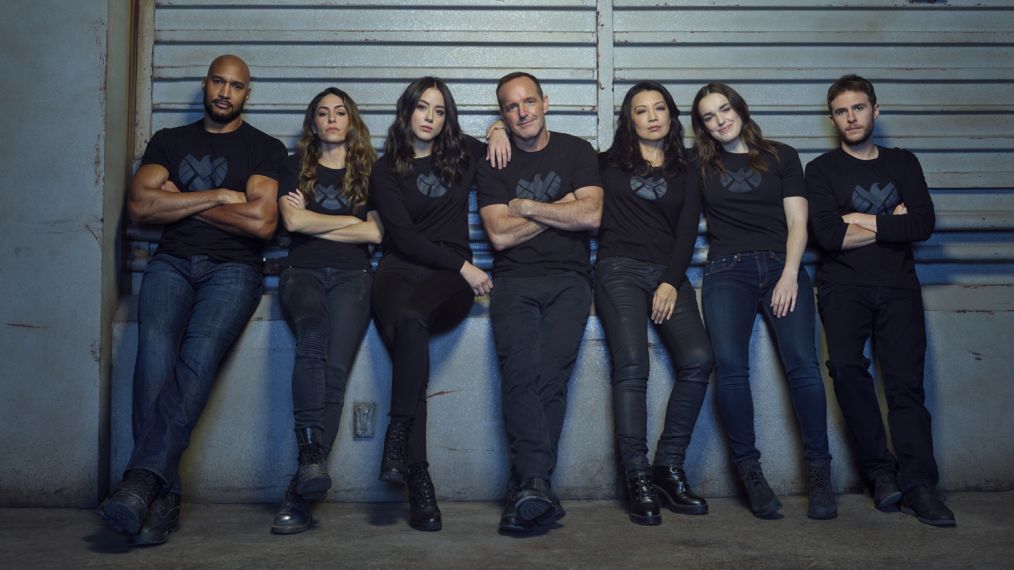
A spy’s goodbye to Agents of SHIELD
July 26, 2019
So it’s official.
“Agents of S.H.I.E.L.D.” is ending after season seven.
I mean, I figured – I work in TV. I know how to spot the signs. And I’m immensely grateful to have gotten past that emotional but “felt oh so final” finale of Season five when I thought it really was “The End” and gotten more time with my favorite crew of government secret agents.
The good news – we’re still three episodes away from the end of season six – and we don’t officially lose our Agents until next year when the final season airs.
But for the men and women who have made this show day in and day out for seven seasons – the end is coming soon. They’re filming their final episode. And then it’ll be time to say goodbye.
So first, I just wanted to say this…
THANK YOU!!!!!!!!!!!!!!!!!!!!!!!!!!!!
I was not a true believer as I freely admit (mostly because my friends know and will call me on it if I try to front). Despite the involvement of writers I respected and talent I adored (have you seen me swoon over Ming-Na Wen? Because it happens – a lot)… I wasn’t sure I believed this new “Marvel TV” experiment would work. But I really wanted it to. And then I didn’t love it. Not at first. And I walked away like so many other frustrated viewers.
But then a few good friends of mine (take your fanboy bows here, Steve and Phil) convinced me to try again. “Just start with episode 13. If you have questions, we’ll fill you in. But I really think you’ll love it now.”
So I watched episode 1×13.
AND IT WAS OVER.
Melinda May being a total badass, making moon eyes at Phil Coulson? Fitz and Simmons suddenly more than the baby agents I wasn’t sure I loved early on? The cool twisty villain turns I’d craved?
Yep, I was hooked. It was all over.
By then the big OMGWHAT episode that followed “Captain America: Winter Soldier” had aired, so I watched all the available eps on demand. And that was that.
I was in. Thrilled beyond belief that Ward was a bad guy (because he was way more fun as a bad guy,) loving Skye growing up into a more mature young woman because she finally had a family. And did I mention the Coulson and May heart eyes, because… WHAT?!
After that, my love was true and unshakeable. People love to tease me about how much I love this show, and my response to the naysayers is: “I’m sorry. It’s not my fault you don’t know what’s good.”
And the cast just kept winning with great adds… Adrianne Palicki, BJ Britt, Henry Simmons (DO YOU SEE MY HEART EYES RIGHT NOW?!), Nick Blood, Blair Underwood (HEART EYES, AGAIN!) Jason O’Mara (MORE HEART EYES)… I mean, it just goes on and on, and they’ve all been so great.
And if you heard a very loud, joyful, ridiculously gleeful scream when Mike Peterson hero strolled onto the base in the 100th episode – that was DEFINITELY me.
Not that this show hasn’t routinely ripped my heart out. Oh, so many times… but in all the best ways. Even just recently, when Daisy (formerly Skye for those who don’t keep up and missed the name change) ran over and grabbed Melinda May’s hand when they thought they might die? I mean… I am powerless not to feel my heart swell at that mother/daughter moment?! (And May is 100% her mom. I don’t care who gave birth to her, okay?!)
It has always peeved me a bit that somehow the remarkably stunning diversity of this show has gotten the short shrift in the media. The theme of the show has always felt, to me, that “anyone in the world can be a hero” and they’ve reflected that in their choices of heroes: men and women of all ages, women of color, men of color, a gay inhuman with badass powers… and the stories about people who feel the need to attack “others” have always reflected the moral fiber of the Marvel universe to perfection: we protect the “others” because we are all living beings and we deserve to be treated the same.
Also… this show gave me Melinda May to admire – someone who’d been through unspeakable tragedy and yet opened herself up to loving this crazy, mixed-up family she put together to protect Coulson. (P.S. — a testament to the little things, when “Nat” showed up on Melinda May’s call history? Fangirl freakout: May and Black Widow are friends!)
And it gave me a host of flawed, all-too-human heroic beings who sometimes failed — and worse, sometimes gave into their worst instincts – only to find their way back to the person they wanted to be and the family they couldn’t leave behind.
And maybe, emotionally, more than anything, I want to thank AOS for always bringing that same beautiful theme that made me fall in love with the Marvel MCU, starting with “Ironman”: no matter its problems, the world is worth saving.
But maybe most importantly, I need to thank AOS for teaching this then baby writer how to enjoy the ride. The writers, producers, cast, and crew have been incredibly generous with their time on social media, at conventions, and anytime I have encountered them in public. They have shared the love and fun they had making their show with all of us who enjoyed watching it – and that is a lesson I take with me into a future without this group cracking wise on Twitter and making me laugh on Instagram.
When Agents of S.H.I.E.L.D. premiered, no one knew if Marvel TV would be a thing that made it and lasted. And someone had to go first – so also, I thank them for being the start of something that led me to “Cloak & Dagger” and one of the best jobs any nerdgirl fangirl writer could ever ask for. I got a piece of that joyous work experience on our show, and I treasure it like a gift someone picked out especially for me.
So THANK YOU – to everyone who has written words, marked marks, set up cameras, fed the set, hung lights, ran errands, edited footage, killed it on the special effects, figured out how to blow things up on a network budget, touched up make up, fixed some hair, designed a costume, dressed a set, dreamed up a set… and on and on and on.
Your work was loved. You will be missed. And I hope your AOS memories are wonderful for a lifetime.
<lifts a shot glass to you all>
 niceolelevy